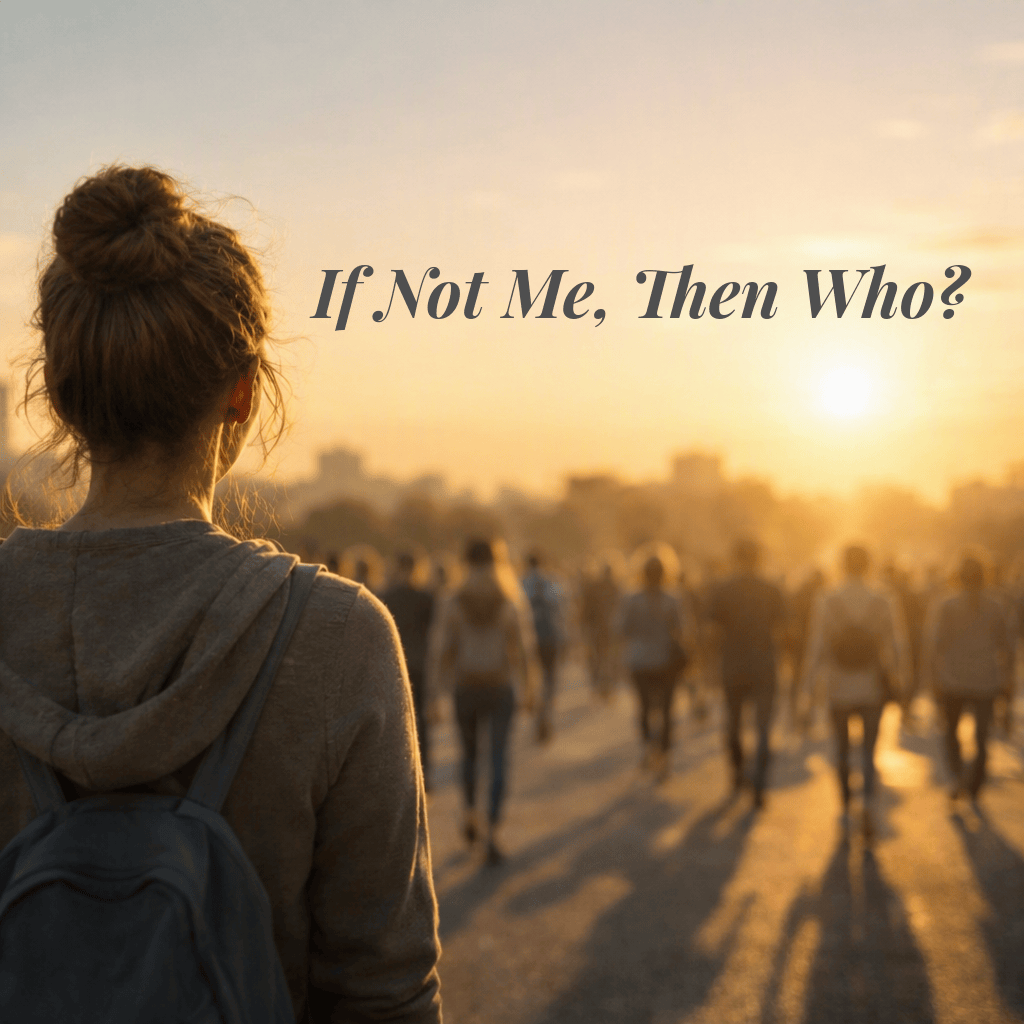
There are days when the world feels too heavy to look at directly. The headlines blur, the stories ache, and the suffering of strangers feels like more than one heart should have to hold. On days like these, choosing silence feels like the safest option.
It would be easier—so much easier—to look away. To tell myself I’m just one person. To hope someone wiser, braver, or louder will step up. But love, the kind of love the Spirit grows in us, has a way of tugging at the sleeve. It whispers: If not me, then who?
We don’t always like that question. Answering it might mean stepping into discomfort. It might mean speaking up when it would be easier to stay silent. Because, in all honesty, there are days when I lean toward silence. Not because I don’t care, but because caring costs.
Courage doesn’t alway looks dramatic. Most of the time, it looks like an ordinary person deciding that silence costs too much. It looks like choosing presence over passivity, understanding the power of speaking up over convenience, and remembering that even small choices ripple outward into a country already stretched thin by division and distrust.
That’s where three old, familiar words matter most. “We, the people.” We recite them with pride, but they also come with responsibility. They remind us that democracy is shaped not only by elections or institutions, but by everyday voices willing to speak with clarity and conscience.
Yes, we have the right to remain silent. But silence has its own consequences. It may protect our comfort or reputation, but it seldom protects the vulnerable. It never protects the truth. And it never protects the kind of society we say we want. When we choose to stay quiet, the public square doesn’t remain empty—it fills with whatever voices are willing to dominate it, whether or not they speak with wisdom or compassion.
That’s why our voices matter, the story will move on without us, often in ways that don’t reflect the values we hold dear.
But when ordinary people—the polite, the conflict-averse, the ones who would rather keep the peace—choose to speak with steadiness and kindness, something shifts. The center of gravity moves. The moral imagination widens. Courage becomes contagious.
So the question is no longer whether we have the right to remain silent. We do. The question is what becomes of “we, the people” when we choose silence.
For those of us who hold to faith, this question goes even deeper into the connection between faith and justice. We’re not just called to believe, we’re called to love. And love doesn’t look away. Love doesn’t ignore harm or injustice and call it peace. As people of faith, we are called to pray for peace, but we are also called to be peacemakers. Real love moves toward what is broken, even when it costs something.
At our best, we recognize the inherent dignity of another human being. We know, somewhere deep inside, that every person deserves respect—even when we disagree. The health of a nation doesn’t depend on everyone thinking alike, but on seeing one another as neighbors who deserve the same respect and dignity that we desire for ourselves.
Think about it—this is an opportunity available to each of us: to refuse silence not out of anger, but out of love. To speak not to win, but to witness. To step forward not because we are fearless, but because we recognize that waiting for someone else is simply another way of saying it doesn’t matter.
But it does matter. Every voice that chooses truth with humility, every act of courage rooted in compassion, and every refusal to dehumanize another person nudges the world in a better direction.
If not me, then who?
And if not now, then when?
 Thoughts from Everyday Life
Leave a comment