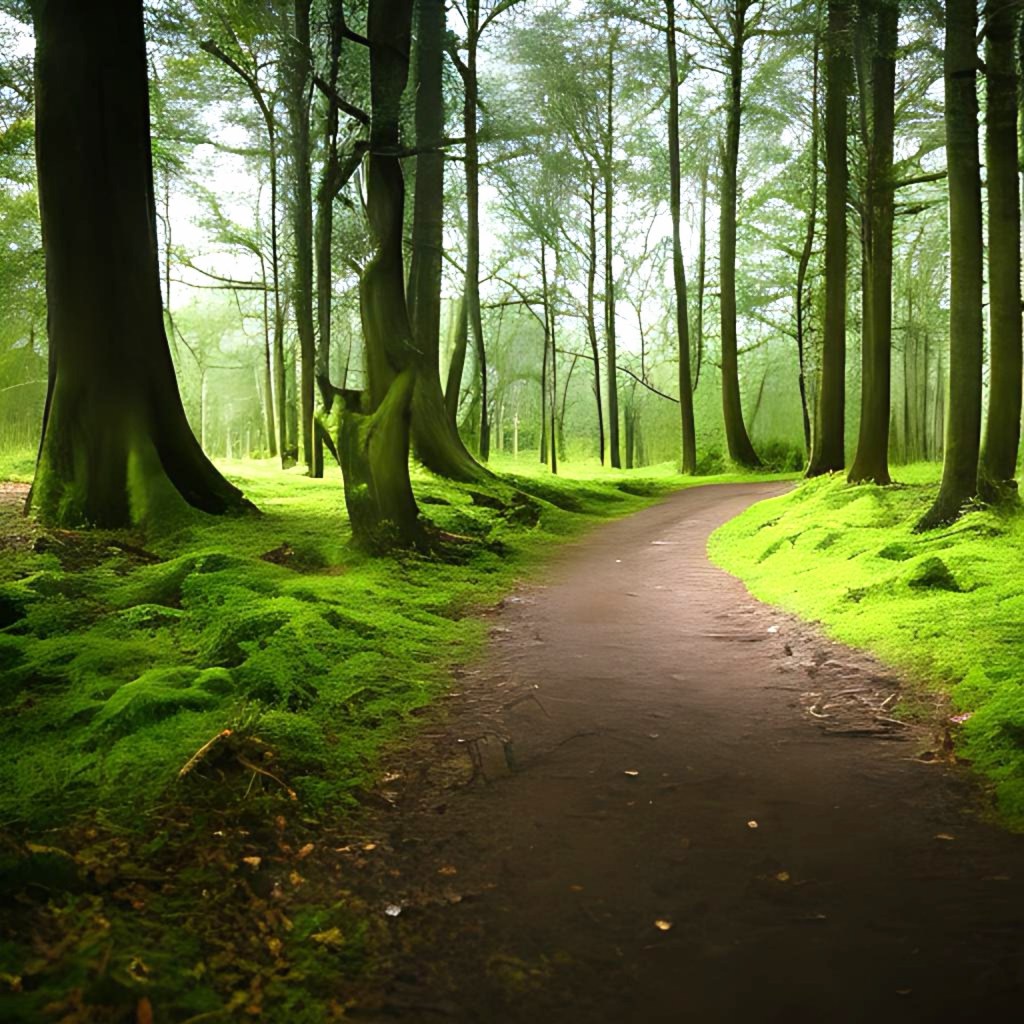
There are few gifts as wonderful as a true friend — someone who meets you with ease, who listens without hurrying you along, who holds your stories the way one holds something fragile and alive.
To have such a friend is a blessing. To be one is a quiet kind of devotion — a way of saying, I see you, and I’m not going anywhere.
Friendship comes to us in many forms.
Some friendships arrive naturally, like two paths that simply meet — effortless, familiar, as if you’ve known each other longer than you have.
Some take time, unfolding slowly, like a shy tree learning to trust the light — patient, steady, worth the wait.
Some are honest but casual, warm in passing, like sunlight that touches the forest floor only for a moment.
And some become the ones we cherish most — the friends we feel at home with, who make room for our whole selves, who remind us what it means to be known.
Noticing these differences teaches us something about the kind of friend we appreciate — and the kind we long to be.
We want to be the friend who listens with presence, who remembers the small things, who offers gentleness instead of judgment.
We want to be the friend who makes others feel safe enough to be real.
And still, we may wonder how to strengthen and care for the friendships that matter. We look for big answers: better communication, more patience, clearer boundaries. All of these help. But beneath them, like roots beneath the soil, there is something softer and more essential.
Friendship deepens when we allow ourselves to be seen. Not the polished version. Not the forest we hold up for admiration. But the individual trees — the honest, imperfect pieces of who we are.
We spend a lot of time tending to the image of our forest — smoothing the edges, arranging our lives so others see only what feels safe.
But it’s hard to love a forest you’re never allowed to walk through.
And it’s hard to be loved if no one is invited close enough to see the trees.
Vulnerability — the word sounds sharp, but the experience is gentler. It is simply the courage to let someone step a little nearer.
Near enough to see the bent trees shaped by old storms.
Near enough to see the young, tender ones — our hopes, our soft spots — that we fear might be brushed aside.
Near enough to see the places we’ve been told are “too much” or “not enough.”
We hide some trees for reasons we believe will protect us. We hide the bent ones out of fear of judgment. We hide the tender ones out of fear of dismissal. We hide almost everything when we’ve been hurt before, because distance feels safer than risking that kind of pain again.
So we offer people the forest from a distance: a neat story, a practiced version of ourselves — a forest that’s easy to admire, yet hard to truly know.
But friendship changes when we let someone closer — not all at once, just one tree at a time.
Maybe we share a small fear, a quiet truth, a story we usually keep tucked away. If the other person stays, listens, and holds it gently, a quiet shift happens inside us. We realize we can be seen and still be safe.
And vulnerability invites vulnerability.
When we take even a small risk and show something real, it signals to the other person that they can do the same. This is how trust grows — slowly, mutually, like two forests leaning toward each other.
Beneath that growing trust, gratitude begins to bloom.
Gratitude is the light that moves through a friendship like morning sunshine through branches — soft, steady, warming everything it touches. It reminds us that true friendship is not something to take for granted; it is a beautiful gift.
A listening ear.
A steady presence.
A way of remembering the small things said in passing.
A way of staying around even when life gets tangled.
Gratitude turns these moments into something sacred. It teaches us to pause, to notice, to whisper a thank you for the person who walks beside us — not because our forest is perfect, but because they choose to love it as it is.
And when we let ourselves feel that gratitude fully, we become gentler friends in return — more patient, more open, more willing to offer the same tenderness we’ve been given. Gratitude deepens friendship the way rain deepens roots: quietly, naturally, without needing to be seen.
Conversations shift. We stop performing and start resting. We stop offering polished landscapes and start offering truth. Friendship becomes less about appearing strong and more about truly knowing each other.
And the beautiful thing is, vulnerability doesn’t just change how others see us — it also changes how we see ourselves. When someone looks at our crooked, weathered, honest trees and says, “I’m still here,” it becomes easier to believe we are worthy of love exactly as we are.
That is the blessing of a true friend.
And that is the gentle, courageous work of being one.
Author’s Note:
This essay is part of my ongoing attempt to understand the landscapes within us — the forests we tend, the trees we hide, the ones we slowly learn to reveal. I’m learning that friendship grows in the places where honesty and gentleness meet. Thank you for reading, and for walking a few steps into this forest with me.
 Thoughts from Everyday Life
Leave a comment